Spotlight on Flex – Kate Saracene
Our Spotlight on Flex showcases professionals from member organizations who exemplify personal and professional success while working a flexible schedule. Their stories illustrate the long-term benefits that flexible schedules offer to both individuals and organizations.
March 2020 Spotlight on Flex
 For March 2020, we are pleased to share insights from Kate Saracene Partner, Katten Muchin Rosenman (Chicago, IL & New York, NY)
Diversity & Flexibility Alliance: How have you made flexibility a priority and a success with your schedule?
Kate Saracene: My career path has alternated between human resources (HR) and legal practice. I started out in HR at Xerox and continued to work there part time while I attended law school in Connecticut. Once I graduated, I started working for Nixon Peabody on a traditional legal career path. I had my first child, and when I came back from maternity leave, I tried to work a part-time schedule. However, during my first week back, I was working full time hours and asked to come in on the weekend. By pure luck, a few days later, Xerox called me out of the blue and offered me a managerial position. They said I could name my terms, and the timing could not have been more perfect. I went back to work for Xerox for more money and working four days a week at an 80% reduced hours schedule.
I remained at Xerox for a few years, but I returned to Nixon Peabody in a non-partner track counsel position (first on an 85% then to an 80% reduced hours schedule). By this point, my kids were older, and I came into the office five days a week. But I was able to use my 20% of non- billable hours to focus on what I needed to do outside of the office – business development opportunities, activities at my kids’ schools, doctor’s appointments, etc. Nixon subsequently changed its policy to allow reduced hours attorneys to make partner. I switched my track, was promoted to partner shortly thereafter, and I kept my reduced hours schedule the entire time!
I had built a reputation as a national expert in health and welfare benefits, especially the Affordable Care Act (aka “Obama Care”). Katten’s Chicago office was in the midst of succession planning, and they were looking for someone with my particular areas of expertise. They asked me to join the firm in November 2017 as a partner in the employee benefits group.
When I started at Katten, my youngest was already 11 years old; I didn’t need flexibility in terms of reduced hours anymore so I switched back to full time. My flexibility with the firm, however, stems from the fact that even though I have dual residency in the Chicago and New York City offices, I live full time in Rochester, NY! I go between the two offices – typically twice a month to Chicago and once a month to New York City. And in September 2019, I became the employee benefits Practice Group Leader (PGL). There are 10 people in the group spread throughout the firm’s offices (Chicago, New York City, and DC). Even though I’m working full time, I have my own client base and still control my schedule – I can pick up the kids from school, work on my laptop while waiting in the carpool line, or while waiting for their sports practice to be over. I’ve done work waiting in coffee shops, ice rinks… you name it!
DFA: How have the firm and/or clients contributed to your Flex Success®?
KS: You don’t need to be as client-facing in my practice area as you do in other areas. It’s more counseling by phone or email. I’m in an industry where several of my client contacts are women (HR tends to skew more female), and they’re very supportive. Corporations are coming around to flexible work options faster than law firms, so to them, my arrangement is normal. Becoming a partner was really a key factor to my flex success because I mostly work for my own clients, and I can schedule my meetings to work with my flexibility.
When I first started talking with Katten, I asked the recruiter to test the waters with a telecommuting arrangement because I wasn’t willing to relocate from Rochester, NY. We agreed I would come to a Katten office as much as possible – about half the week for three weeks of the month. Over time, the office schedule has become less rigid, but the amount of time I spend in a physical office has worked out because of client needs, meetings, and things I want to attend in the office.
DFA: How has working flexibly made your career more sustainable and contributed to business/professional development opportunities?
KS: It’s enabled me to return to the practice of law. I left the law after having my first child because I didn’t think this industry could successfully incorporate flexible work. I was originally in employment litigation, but I switched to employee benefits counseling when I came back to Nixon. I had to change my focus in order to find a way to continue practicing law with flexible work options. I probably wouldn’t have returned to law after being at Xerox if flexible work was not an option.
Even though my schedule changed over the years, I’ve been able to use flexible work to focus on writing articles, giving speeches, and traveling to conferences to enhance my personal and professional development.
DFA: Looking back, would you do anything differently, or what would you tell your younger self?
KS: I would tell my younger self to slow down and wait for the right opportunity to present itself. When I was first out of law school, my goal was to be the youngest income partner at a major law firm; I was in such a hurry to reach my next destination.
One Nixon partner said I was ruining my career when I decided to leave the firm to go back to Xerox. But I made the right decisions that worked for me at the time. I remember once during a succession planning meeting at Xerox, a senior manager was talking about the life cycle of a career – there are points in your life when you focus on school, on your job, or on your family. We need to recognize that; when people are at a point where they need to switch their focus away from their career, you wait and support them because you want that employee back. If you just cut people off during those times, you’ll lose the best talent.
I’ve been trying to coach myself through my career with this philosophy. There are going to be years where your career isn’t your focus, and that’s OK. You have to do what’s best for you.
If I had embraced that early on, I would have had less angst along the way. I wish I had known how well everything would work out. I would have never of imagined being a PGL while working remotely and commuting to a Chicago based firm. It just wasn’t even in my line of sight.
DFA: How do you recharge, and how do you pay it forward?
KS: The yoga studio is my happy place. I went through a rough patch after my second divorce – that really knocked the wind out of me. Just like I never thought I’d be a remote PGL at a major law firm, I never thought I’d be twice-divorced at 41. I found solace through meditation and by practicing yoga. Instead of sitting home alone on a Friday night, I went to the yoga studio. You always belong to a community there, and I developed an amazing circle of friends. I also met really great business contacts through the yoga community.
I loved it so much that I became a certified yoga instructor and was able to teach a few classes a week. Now my teaching is more on a voluntary basis for the local bar association; I lead meditation CLE programs, and I’ve ended up incorporating these practices at the firm too. At Katten, I worked with HR to establish a national wellness committee and start a firm-wide wellness initiative. I’ll be one of the quarterly speakers for the firm’s wellness webcast talking about how meditation can enhance the practice of law.
It’s interesting because my chain of command both at Nixon and Katten are both big proponents of yoga and meditation. Because of this, I’ve always felt very much at home at Katten. It also affirms that when management supports implementing these practices, it succeeds because they recognize the benefits for mental health (especially in our profession). I use this to pay it forward – figuring out the best way to bring these practices to the legal community. I led a meditation session at the firm’s practice group leader training a few months ago – so many people spoke to me afterwards to learn more and talk about it. I know we had an impact that day. Sometimes you just have to expose people to something new to get them interested. I also led a meditation session at the new partner orientation and for the mid-level associates’ academy.
You have to be open to sharing your experiences in order to really see change and help others. When I spoke at the new partner orientation, I candidly shared my career and life experiences, and other women partners have asked me to mentor them as a result. I’m a huge advocate for flex; people need to know they don’t have to follow a traditional path in order to “make it” anymore.
 MK: Boston Consulting Group (“BCG”) is a dream job for me. I love the impact and variety of our projects and the caliber of our talent. I started as an associate, then consultant to project leader, was promoted to principal, and then again to my current role as a managing director and partner in 2018. BCG has been so supportive every step of my career – between transferring offices twice because of my husband’s career and working at a reduced [hours] capacity. A year into my role as a project leader in 2012, I switched to a flex schedule – this was even before I had kids. I had been at BCG for five years, was traveling extensively, and working a lot of hours. I was at the point where I was jealous of my friends at other jobs who had time during the week (not just the weekends) to do the things they enjoyed. I wanted that option too. But I struggled with how to achieve that work/life control when my colleagues were working more than that. I didn’t think it was fair to change my schedule when the rest of the team was counting on me. I have a background in economics, and after looking at the amount of hours/week I was putting in, I realized the marginal cost to me personally, of each additional hour past 40 hours/week, was a lot higher than the marginal cost of the first 10 hours I worked. I wanted to optimize on the margins; I was willing to give up 20% of my pay in order to shed 20% of the hours that had the highest personal cost to me. In other words, I wanted to work at an 80% capacity by being in the office five days a week, leaving early to be home and have dinner with my husband, and not worry about opening my laptop in the late evening hours. Of course, there were times I had to stay late or meet with clients, but it was an absolute step change in my relationship with managing work and life. I’ll be honest; I didn’t think a reduced schedule was going to work at first. But I needed to make a change. My partners were extremely supportive, clients knew about my schedule change, and BCG put extra resources on my teams so coverage was always in place. I was able to turn down certain projects with confidence that it wouldn’t impede my advancement. In 2013, I had my first child, and I probably would not have come back to work at BCG if I didn’t have flex options in place. I’ve made flex work for me as needed during different stages in my career and life. I was a principal when I had my second child, and I started dividing my time between multiple client projects. But it wasn’t feasible to work five shorter days a week with this arrangement. Instead, I switched to taking one day a week off (either Wednesdays or Thursdays). After my third maternity leave, I went to a 60% reduced capacity schedule and ramped back up to 80% with one day a week off. However in 2018, I took a medical leave of absence; when I returned to work, I went back to 60% reduced capacity, with two days off per week. I’ve been on this schedule ever since. Nothing is set in stone – some weeks I need to switch which days I’m out of the office or some weeks I have to bank my time off for another week. The most important thing is that I work with my team to make sure there’s coverage for our clients. It’s flexible flexibility.
 AB: Before joining Squire Patton Boggs (“Squire”) in 2014, I worked at another large regional law firm and focused my practice on public finance. After my daughter was born, I changed my schedule to telecommute one day a week, but after a year, I wanted more flexibility in my schedule and more time to spend with her. That firm already had several attorneys working reduced hours, and it was clear our practice group’s partners were supportive of flexible work arrangements. I switched to an 80% reduced hours schedule and was in the office four days a week.
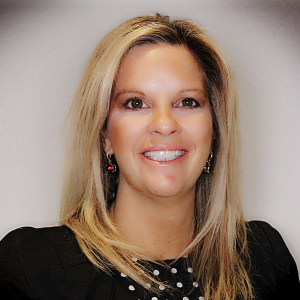 Jennifer Flynn: When I joined as the Head of Capital One’s Small Business Bank (SBB) division in June 2018, the team was on an incredible cultural journey with a huge focus on inclusivity and creating a sense of belonging across all of our sites. I knew immediately that I wanted to be a part of this transformation. Together, with my leadership team, we declared “reimagining our associate experience” as one of our top goals for 2019. This includes investing in our leaders, promoting flexibility, and embracing differences across our teams. We actively encourage each associate to bring their authentic selves to work each day, and I love watching this transform our division’s culture. Our SBB team is always raising the bar; our business is better because of how we work, and as a result, so are our customers.
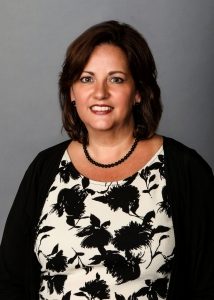 For August 2019, we are pleased to share insights from Stephanie Smithey, Shareholder,
 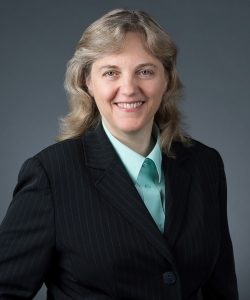 Sharon Newlon: I had always looked for a career that could meld my interest in math, science, and the law. By the time I was in law school, I knew I wanted to focus on environmental law since this mixed all my interests into one area. I was introduced to Dickinson Wright when I was hired after my first year of law school as a research associate for a bankruptcy attorney here who was writing a book for Matthew Bender. Dickinson didn’t hire first year interns for its summer program at the time, but I was introduced to the head of their environmental practice and invited back for my second year summer in 1987. I expressed my interest in environmental law and was assigned great projects in that area – and I’ve been with the firm ever since!