Action Step – 5 Critical Strategies to Ensure Organizational Success During Crisis-Related Remote Work

The Alliance’s Action Steps are designed to assist organizations with implementing practical strategies and policies related to diversity and flexibility. Members can access full versions of all of the Alliance’s Action Steps in the Member Resource Center

The international COVID-19 crisis during the Spring of 2020 will be remembered as one of the most challenging times for individuals, families, governments and businesses worldwide. While individuals attempt to self-isolate, practice social distancing and preserve some sense of normalcy for their families, organizations are struggling to maintain their products and services. The most critical challenge facing all businesses is how to continue to provide quality services and products while most, if not all, employees are working from home.

Here are five strategies critical to organizational success when employees are working remotely during a pandemic or international crisis:

  1. COMMUNICATE

Constant and clear communication from leadership is vital to ensuring employees are mindful of the need to telecommute, understand the guidelines related to time and work commitments, and are aware of the resources and support that are available. Supervisors should clearly communicate the need for check-ins, updates, deadlines and virtual meetings. They should also be providing regular feedback via phone or email. It’s also helpful for the human resources team to communicate with employees to identify and resolve any issues related to telecommuting and to check in since many employees may feel particularly isolated.

Members can access the complete Action Step in the Member Resource Center. To read this entire Action Step become a member of the Diversity & Flexibility Alliance.  To learn more about developing and implementing a successful flexible working policy, contact Manar Morales.  

Spotlight on Flex – Kate Saracene

Our Spotlight on Flex showcases professionals from member organizations who exemplify personal and professional success while working a flexible schedule. Their stories illustrate the long-term benefits that flexible schedules offer to both individuals and organizations.

March 2020 Spotlight on Flex

For March 2020, we are pleased to share insights from Kate Saracene Partner, Katten Muchin Rosenman (Chicago, IL & New York, NY)

Diversity & Flexibility Alliance: How have you made flexibility a priority and a success with your schedule?


Kate Saracene: My career path has alternated between human resources (HR) and legal practice. I started out in HR at Xerox and continued to work there part time while I attended law school in Connecticut. Once I graduated, I started working for Nixon Peabody on a traditional legal career path. I had my first child, and when I came back from maternity leave, I tried to work a part-time schedule. However, during my first week back, I was working full time hours and asked to come in on the weekend. By pure luck, a few days later, Xerox called me out of the blue and offered me a managerial position. They said I could name my terms, and the timing could not have been more perfect. I went back to work for Xerox for more money and working four days a week at an 80% reduced hours schedule.

I remained at Xerox for a few years, but I returned to Nixon Peabody in a non-partner track counsel position (first on an 85% then to an 80% reduced hours schedule). By this point, my kids were older, and I came into the office five days a week. But I was able to use my 20% of non- billable hours to focus on what I needed to do outside of the office – business development opportunities, activities at my kids’ schools, doctor’s appointments, etc. Nixon subsequently changed its policy to allow reduced hours attorneys to make partner. I switched my track, was promoted to partner shortly thereafter, and I kept my reduced hours schedule the entire time!

I had built a reputation as a national expert in health and welfare benefits, especially the Affordable Care Act (aka “Obama Care”). Katten’s Chicago office was in the midst of succession planning, and they were looking for someone with my particular areas of expertise. They asked me to join the firm in November 2017 as a partner in the employee benefits group.

When I started at Katten, my youngest was already 11 years old; I didn’t need flexibility in terms of reduced hours anymore so I switched back to full time. My flexibility with the firm, however, stems from the fact that even though I have dual residency in the Chicago and New York City offices, I live full time in Rochester, NY! I go between the two offices – typically twice a month to Chicago and once a month to New York City. And in September 2019, I became the employee benefits Practice Group Leader (PGL). There are 10 people in the group spread throughout the firm’s offices (Chicago, New York City, and DC). Even though I’m working full time, I have my own client base and still control my schedule – I can pick up the kids from school, work on my laptop while waiting in the carpool line, or while waiting for their sports practice to be over. I’ve done work waiting in coffee shops, ice rinks… you name it!

DFA: How have the firm and/or clients contributed to your Flex Success®?

KS: You don’t need to be as client-facing in my practice area as you do in other areas. It’s more counseling by phone or email. I’m in an industry where several of my client contacts are women (HR tends to skew more female), and they’re very supportive. Corporations are coming around to flexible work options faster than law firms, so to them, my arrangement is normal. Becoming a partner was really a key factor to my flex success because I mostly work for my own clients, and I can schedule my meetings to work with my flexibility.

When I first started talking with Katten, I asked the recruiter to test the waters with a telecommuting arrangement because I wasn’t willing to relocate from Rochester, NY. We agreed I would come to a Katten office as much as possible – about half the week for three weeks of the month. Over time, the office schedule has become less rigid, but the amount of time I spend in a physical office has worked out because of client needs, meetings, and things I want to attend in the office.

DFA: How has working flexibly made your career more sustainable and contributed to business/professional development opportunities?

KS: It’s enabled me to return to the practice of law. I left the law after having my first child because I didn’t think this industry could successfully incorporate flexible work. I was originally in employment litigation, but I switched to employee benefits counseling when I came back to Nixon. I had to change my focus in order to find a way to continue practicing law with flexible work options. I probably wouldn’t have returned to law after being at Xerox if flexible work was not an option.

Even though my schedule changed over the years, I’ve been able to use flexible work to focus on writing articles, giving speeches, and traveling to conferences to enhance my personal and professional development.

DFA: Looking back, would you do anything differently, or what would you tell your younger self?

KS: I would tell my younger self to slow down and wait for the right opportunity to present itself. When I was first out of law school, my goal was to be the youngest income partner at a major law firm; I was in such a hurry to reach my next destination.

One Nixon partner said I was ruining my career when I decided to leave the firm to go back to Xerox. But I made the right decisions that worked for me at the time. I remember once during a succession planning meeting at Xerox, a senior manager was talking about the life cycle of a career – there are points in your life when you focus on school, on your job, or on your family. We need to recognize that; when people are at a point where they need to switch their focus away from their career, you wait and support them because you want that employee back. If you just cut people off during those times, you’ll lose the best talent.

I’ve been trying to coach myself through my career with this philosophy. There are going to be years where your career isn’t your focus, and that’s OK. You have to do what’s best for you.

If I had embraced that early on, I would have had less angst along the way. I wish I had known how well everything would work out. I would have never of imagined being a PGL while working remotely and commuting to a Chicago based firm. It just wasn’t even in my line of sight.

DFA: How do you recharge, and how do you pay it forward?

KS: The yoga studio is my happy place. I went through a rough patch after my second divorce – that really knocked the wind out of me. Just like I never thought I’d be a remote PGL at a major law firm, I never thought I’d be twice-divorced at 41. I found solace through meditation and by practicing yoga. Instead of sitting home alone on a Friday night, I went to the yoga studio. You always belong to a community there, and I developed an amazing circle of friends. I also met really great business contacts through the yoga community.

I loved it so much that I became a certified yoga instructor and was able to teach a few classes a week. Now my teaching is more on a voluntary basis for the local bar association; I lead meditation CLE programs, and I’ve ended up incorporating these practices at the firm too. At Katten, I worked with HR to establish a national wellness committee and start a firm-wide wellness initiative. I’ll be one of the quarterly speakers for the firm’s wellness webcast talking about how meditation can enhance the practice of law.

It’s interesting because my chain of command both at Nixon and Katten are both big proponents of yoga and meditation. Because of this, I’ve always felt very much at home at Katten. It also affirms that when management supports implementing these practices, it succeeds because they recognize the benefits for mental health (especially in our profession). I use this to pay it forward – figuring out the best way to bring these practices to the legal community. I led a meditation session at the firm’s practice group leader training a few months ago – so many people spoke to me afterwards to learn more and talk about it. I know we had an impact that day. Sometimes you just have to expose people to something new to get them interested. I also led a meditation session at the new partner orientation and for the mid-level associates’ academy.

You have to be open to sharing your experiences in order to really see change and help others. When I spoke at the new partner orientation, I candidly shared my career and life experiences, and other women partners have asked me to mentor them as a result. I’m a huge advocate for flex; people need to know they don’t have to follow a traditional path in order to “make it” anymore.


 

Diversity & Flexibility Alliance Shares Best Practices for Organizations Transitioning to Remote Work During the Coronavirus Crisis

Washington, DC – March 16, 2020 – Given the growing number of organizations allowing employees to work remotely to reduce the spread of Coronvirus (COVID-19), the Diversity & Flexibility Alliance today released guidelines regarding telecommuting best practices to help ensure employees are safe, engaged and productive.

“We encourage all corporations and organizations to offer remote working to their employees, to the extent possible, during the Coronavirus crisis,” said Manar Morales, President & CEO of the Diversity & Flexibility Alliance. “However, it’s important that employers exercise patience as they implement remote working, in particular in organizations where telecommuting has not been the norm. Employers should be mindful of the unique challenges employees are facing during this unprecedented crisis, such as childcare during school closures, eldercare and a heightened level of anxiety and stress,” she added. “Employers should consider offering resources such as remote working training, as well as childcare and technology stipends to ease the economic and emotional tolls this crisis is taking.”

The following guidelines are relevant for both those organizations that already have a formal telecommuting policy, as well as those that don’t:

  1. Clearly Communicate Availability and/or Need to Telecommute. Organizations need to be crystal clear with their employees regarding telecommuting in the wake of COVID-19. For employees that need to telecommute due to possible exposure, organizations should reach out, clarify the need to telecommute and the length of time it is necessary, and offer resources to help with this arrangement. Additionally, many organizations are offering the option to telecommute to avoid exposure – again, it is important to communicate the length of time (if any) this option can be used and resources/support available.
  2. Best Practices for Telecommuters. It is not enough to simply inform employees that they can or must telecommute. It is important to provide employees with guidelines on ways to telecommute effectively. For example, employees need to communicate well with team members regarding deadlines, project updates and availability; communication is especially important in this situation as workers are more isolated and may have more personal conflicts than usual (i.e. children home from school). As another example, organizations should clarify the difference between working remotely and taking a sick day.
  3. Best Practices for Supervisors. It is equally important to provide supervisors with best practices and guidelines for managing remote workers and teams. Supervisors will need to remain patient and be mindful that employees are dealing with many unusual challenges at this time. Supervisors should clearly communicate expectations with those working remotely (i.e. specify when they should join meetings via phone vs. video), foster communication (i.e. virtual meetings/check-ins), and provide regular feedback.
  4. Communicate Support/Resources. Organizations should carefully think through available resources/support for telecommuting employees. This is particularly important now, when there may be employees who are not used to telecommuting regularly and a larger volume than usual who may be working remotely. Human Resources, Talent Development and D&I Professionals should convene and discuss available resources, including organization-wide support that can be leveraged from an Employee Assistance Program (EAP) and membership organizations.
  5. Consider Providing Additional Resources. As employees who need to telecommute now may face different challenges, organizations need to think through ways to help them. Work with your IT Department to understand what additional technology might be necessary. Does your organization have enough bandwidth to support a large volume of telecommuters? Does your organization have an application for virtual meetings? Do you want to consider providing technology allowances to make sure employees have the necessary resources to be as productive as possible? In addition, it is important to think through childcare/eldercare support. Some employees may face school closures and need childcare. Have you communicated any childcare resources and/or dependent care policy to employees? Have you considered providing a paid subscription for childcare/eldercare sourcing platforms (i.e. Care.com, Sittercity.com, UrbanSitter.com, etc.)? Would your organization provide a special childcare/eldercare allowance to help defray costs?
  6. Check-In to Understand Experiences. A member from the human resources or talent management team should check-in with employees to understand their telecommuting experience, including what’s working well and what needs to improve. This way, organizations can resolve any issues as quickly as possible, and gather success stories. For employees who are mandated to work remotely due to possible exposure to COVID-19, it is particularly important to check-in as they may already feel isolated.

The Diversity and Flexibility Alliance is a think tank that collaborates with organizations to develop non-stigmatized flexible work policies that promote inclusive work cultures and help to advance more women into leadership positions. The Alliance provides practical research-based solutions, training workshops, and strategic advisory services that increase organizational effectiveness through diversity and flexibility.

Law Firms Leading the Way on Parental Benefits in 2019 | Law 360


Business Continuity, Success (and Sanity) During COVID-19 Telecommuting (Bonus Signature Seminar)

Tuesday, March 24, 2020 – 1:00 – 2:15 pm EST

Featuring – Manar Morales, President & CEO of the Diversity & Flexibility Alliance

Whether or not you have a telework policy already in place, there are best practices to follow, both as a supervisor and as a teleworker, when unforeseen circumstances force organization-wide, unscheduled remote work.  It’s not always a simple matter of logging in, especially when you may not have been prepared to telework for an unspecified length of time.

The Alliance has always been a proponent of teleworking, and we’re here to share best practices for business continuity, success, and maintaining your well-being during this time. What can managers do to make sure employees have the resources they need to keep workflow seamless? What can employees do to stay engaged and productive? What can we all do to support each other? What are additional telework policy considerations to think about moving forward?

Join us for our special webinar for members where Manar Morales, the Alliance’s President & CEO, will share guidelines on these issues and answer your questions. Although we will be taking questions during the webinar, please feel free to forward any before the webinar (email manar@dfalliance.com) so we make sure we get to everyone.

New Study Shows Law Firms Making Promising Improvements to Parental Leave and Flexible Work Policies

Progressive Parental Leave and Flexible Work Programs Becoming a Major Industry Priority

Washington, DC – February 26, 2020 – The Diversity & Flexibility Alliance announced today that the results of its 2019 Law Firm Flexibility Benchmarking Study show that the industry is making measurable improvements to the quality and breadth of its parental leave and flexible work policies.

This study consisted of one-on-one interviews with leaders and talent professionals from 50 major law firms and serves to provide multilayered trends, insights and data about successes and challenges with parental leave and flexible work programs and practices. The goal of the initiative is to examine the availability and accessibility of holistic flexible work and parental leave policies, in particular, the types of policies, the features of these policies, and the support/resources around these policies.

The study found that virtually all firms interviewed have continued to offer formal gender-neutral leave and flexibility to attorneys, and many also offer on-ramping (gradual return-to-work) programs to attorneys returning from parental leave. Additionally, a significant number of firms are demonstrating a strong commitment to these policies by removing caregiver designations, increasing the amount of paid leave time generally, and offering fully-paid on-ramping.

However, the study also found that more firms need to provide better support structures around flexible work programs in order to promote better usage, true acceptance and accessibility for all. More firms should focus on offering education around flexible work, flexible work affinity groups, true-up policies to compensate reduced hours lawyers who work more than their agreed upon schedule, and more comprehensive and consistent monitoring mechanisms. Additionally, the study revealed that there is a substantial, qualitative gap between staff and attorney parental leave and flexible work programs.

“We are cautiously optimistic that the majority of firms are beginning to understand that by making minor adjustments to their leave and flexible working policies they can reap major benefits and meet the needs of a new generation,” said Manar Morales, President & CEO of the Diversity & Flexibility Alliance. “We are encouraged that many firms are committing to more progressive parental leave initiatives, however, we hope more firms will commit to building more robust and inclusive policies for all attorneys and staff,” she added. “These relatively inexpensive tools can mean the difference between retaining and loosing a valuable employee at a pivotal time in their lives,” she added.

The report is available to members of the Diversity & Flexibility Alliance (in the Member Resource Center), as well as other participating firms. Detailed results and analysis will be presented during the Alliance’s Flex Launch! NYC – A Boot Camp for Flex Advisors – on Thursday, March 12 (open to non-members). To access this report, contact Manar Morales for more information on Membership.

The Diversity and Flexibility Alliance is a think tank that collaborates with organizations to develop non-stigmatized flexible work policies that promote inclusive work cultures and help to advance more women into leadership positions. The Alliance provides practical research-based solutions, training workshops, and strategic advisory services that increase organizational effectiveness through diversity and flexibility.

Transgender Inclusion in the Workplace

Thursday, March 5, 2020 – 1:00 – 2:15 pm EST

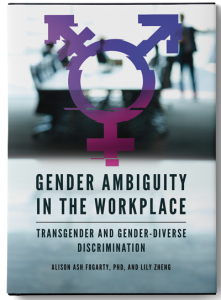
Featuring Lily Zheng, Diversity, Equity & Inclusion Consultant and author of Gender Ambiguity in the Workplace: Transgender and Gender-Diverse Discrimination (2018) and The Ethical Sellout: Maintaining Your Integrity in the Age of Compromise (2019).

In this Signature Seminar, Lily Zheng will share stories and research findings from Gender Ambiguity in the Workplace, and contextualize them within larger industry and cultural trends. They will offer their suggestions for actionable organizational and individual solutions to end discrimination on the basis of gender identity and gender expression and create inclusive workplaces for transgender, nonbinary, and gender-expansive employees.

Spotlight on Flex – Meg Kedrowski

Our Spotlight on Flex showcases professionals from member organizations who exemplify personal and professional success while working a flexible schedule. Their stories illustrate the long-term benefits that flexible schedules offer to both individuals and organizations.

2020 Spotlights

For February 2020, we are pleased to share insights from Meg Kedrowski Managing Director & Partner, Boston Consulting Group (Los Angeles, CA)

DFA: How have you made flexibility a priority and a success with your schedule?

MK: Boston Consulting Group (“BCG”) is a dream job for me. I love the impact and variety of our projects and the caliber of our talent. I started as an associate, then consultant to project leader, was promoted to principal, and then again to my current role as a managing director and partner in 2018. BCG has been so supportive every step of my career – between transferring offices twice because of my husband’s career and working at a reduced [hours] capacity. A year into my role as a project leader in 2012, I switched to a flex schedule – this was even before I had kids. I had been at BCG for five years, was traveling extensively, and working a lot of hours. I was at the point where I was jealous of my friends at other jobs who had time during the week (not just the weekends) to do the things they enjoyed. I wanted that option too. But I struggled with how to achieve that work/life control when my colleagues were working more than that. I didn’t think it was fair to change my schedule when the rest of the team was counting on me. I have a background in economics, and after looking at the amount of hours/week I was putting in, I realized the marginal cost to me personally, of each additional hour past 40 hours/week, was a lot higher than the marginal cost of the first 10 hours I worked. I wanted to optimize on the margins; I was willing to give up 20% of my pay in order to shed 20% of the hours that had the highest personal cost to me. In other words, I wanted to work at an 80% capacity by being in the office five days a week, leaving early to be home and have dinner with my husband, and not worry about opening my laptop in the late evening hours. Of course, there were times I had to stay late or meet with clients, but it was an absolute step change in my relationship with managing work and life. I’ll be honest; I didn’t think a reduced schedule was going to work at first. But I needed to make a change. My partners were extremely supportive, clients knew about my schedule change, and BCG put extra resources on my teams so coverage was always in place. I was able to turn down certain projects with confidence that it wouldn’t impede my advancement. In 2013, I had my first child, and I probably would not have come back to work at BCG if I didn’t have flex options in place. I’ve made flex work for me as needed during different stages in my career and life. I was a principal when I had my second child, and I started dividing my time between multiple client projects. But it wasn’t feasible to work five shorter days a week with this arrangement. Instead, I switched to taking one day a week off (either Wednesdays or Thursdays). After my third maternity leave, I went to a 60% reduced capacity schedule and ramped back up to 80% with one day a week off. However in 2018, I took a medical leave of absence; when I returned to work, I went back to 60% reduced capacity, with two days off per week. I’ve been on this schedule ever since. Nothing is set in stone – some weeks I need to switch which days I’m out of the office or some weeks I have to bank my time off for another week. The most important thing is that I work with my team to make sure there’s coverage for our clients. It’s flexible flexibility.

DFA: How have the firm and/or clients contributed to your Flex Success®?

MK: I did think about leaving at one point, but after talking with other colleagues who were working reduced hours, I knew I had to try a flexible model. Once I decided on my schedule, BCG was on board. It takes some clients a little longer to understand flexible work, but once they see that their deliverables are unaffected and they’re receiving the trusted support they need, any concerns are gone. In our line of work, we bill by deliverables – not by the hour. I know there are partners who are skeptics about reduced hours. In their minds, they don’t see the need to take a pay cut in order to leave early once in a while to see their kids’ games or meet personal commitments. But the trade-offs are worth it to me. The difference between a flex schedule and occasionally leaving early to watch your kids’ games (which everyone should feel empowered to do), is the additional support and resources you have and the consistency to keep those personal commitments during the week. BCG has always focused on supporting me, making sure I’m meeting my personal goals, and that I’m fairly compensated along the way. Since my own switch to a flexible model, BCG has taken steps to formalize and simplify the process for team members. We now offer standard “Flex60” and “Flex80” programs with clear policies around how to ensure fair work schedules, pay, and promotion for individuals seeking a reduced-hours model. We also offer “Time for You,” an opportunity to take eight weeks of unpaid leave with full benefits. I hope this will make flexible models easier for others at BCG to adopt.

DFA: How has working flexibly made your career more sustainable and contributed to business/professional development opportunities?

MK: I wouldn’t be at BCG if we didn’t offer flexible work options. Working reduced hours allows me to be the kind of wife, mother, and friend that I want to be while still delivering outstanding value to clients. Many of my clients are trying to figure out their work/life balance situation too. I’ve found that when I open up to them about my schedule, it tends to be a relationship builder, not a relationship limiter. Ask yourself what you’re trying to achieve while working flexibly. If you’re shooting for something that’s unrealistic for you, your organization, or your clients, then it won’t work. Be clear on what your top priorities are, and set standards that will make you happy.

DFA: Looking back, would you do anything differently, or what would you tell your younger self?

MK: You don’t have to solve for what you need 10 years from now, because you don’t know what you’ll need 10 years from now. Things change. Solve for what you need for the next 6-12 months, and don’t close any doors that would keep you from solving for a different set of needs in a year’s time. There was a period earlier in my career (for about two to three months) where I was trying to build a new set of capabilities and working more than my agreed upon hours. In retrospect, I should have been clearer about I was trying to accomplish and engaged my mentors and partners more. I should have officially changed my hours during that time and been more deliberate and transparent with my goals. Instead, I viewed this as “a great opportunity and I can’t turn it down,” even if I wasn’t sleeping! Had I been more transparent, I would have delivered better value and been more successful at building the skill sets and relationships I wanted at the time.

DFA: How do you recharge, and how do you pay it forward?

MK: Lots of different ways! I’m an avid reader and just finished the book Light from Other Stars, a science fiction novel that’s a fascinating thought-starter on women’s career options and how the trade-offs women have had to make have changed dramatically over the last few decades. My family has annual passes to Disneyland, and we go at least once a month – it’s one of the best ways to use my day off. I’m also fortunate to live in a very walkable neighborhood; I like to walk my kids to and from school, stopping by the park and the local coffee shop. I do my best to mentor other women and men who are trying to solve their own work/life challenges. I’ve seen a significant uptick in men looking for advice too. A year ago BCG kicked off our ”Women in MedTech” initiative, and I’ve been helping lead that program. Internally, we focus on mentorship, affiliation, and ensuring diverse voices are reflected in our leadership. We team with our clients to advance women in MedTech and participate in external forums. It’s been fun to give back and be part of something that triggers thoughtprovoking discussions on diversity and gender, both inside BCG and beyond.

Action Step – Flex Education Instrumental for Success

The Alliance’s Action Steps are designed to assist organizations with implementing practical strategies and policies related to diversity and flexibility. Members can access full versions of all of the Alliance’s Action Steps in the Member Resource Center

In our 2019 Law Firm Flexibility Benchmarking Report, nearly all participating law firms have formal flexibility programs (90%), but the vast majority (66.7%) do not offer education around their flexible work program. Education is vital for flex employees to implement effective work practices and for supervisors to understand how to optimally manage flex employees. When done properly, flex education helps flex employees work more effectively, develop professionally, and advance.

For maximum benefits, organizations can create a solid flex education program by thinking through content, delivery, and audience. With our recommendations below, organizations can implement a best-in-class program which will directly improve the success, utilization, and effectiveness of their flex initiatives.

Members can access the complete Action Step in the Member Resource Center. To read this entire Action Step become a member of the Diversity & Flexibility Alliance.  To learn more about developing and implementing a successful flexible working policy, contact Manar Morales.  

Research Briefing: Trends from the 2019 Law Firm Flexibility Benchmarking Study

Wednesday, February 26, 2020 – 1:00 – 2:15 pm EST

Featuring Manar Morales, President & CEO, The Diversity & Flexibility Alliance

Manar will provide individuals from all member organizations with insights and in-depth analysis on the results of the 2019 Law Firm Flexibility Benchmarking Study. The presentation will include trends and best practices in flexible working and leave initiatives.